
All blogs
-
15th January 2019 Members' Update
May 07, 2019
Thank you to all of our members who supported last weekend's Action Day - whether you turned up to campaign in your local area, or simply supported us through social media at home. Over 300,000 leaflets were distributed, with almost 200 events taking place across the country. Our events are continuing to increase in size as the support for a People's Vote grows.
Speaking of events, here at European Movement HQ, we know that tonight's Brexit Vote is the event that is on everyone's minds. Decision Day Live taking place from 4pm, with a stream of the debate and the vote outcome. It's not too late to join thousands of other passionate pro-Europeans who joining us in Parliament Square. Find out more here.
Don't forget, you can also show your support for the People's Vote campaign with this free poster. You can also write for the European Movement blog (please email me at lauren.pemberton-nelson@europeanmovement if you're interested). The People's Vote campaign is also expanding the volunteer network. If you'd like to help either in HQ, or in your local area and haven't yet signed up to do so, you can sign up to volunteer here.
We also wanted to let you know that as a European Movement member, we'll bringing back the amazing chance to get a discount on our online shop and more! Full details will be announced soon...
Kind Regards,
Lauren Pemberton-NelsonP.S: Don't forget that as a member of European Movement, you're entitled to a discount to the New European with a free book. Click here to enjoy this offer.

8th January 2019 Members' Update
May 07, 2019
Welcome back to 2019's first weekly European Movement Members' update. We hope you had a lovely Christmas and New Years.
This Saturday, we have a People's Vote National Action Day with dozens of local groups out demanding a vote on the final Brexit deal. To find out more information about what's happening in your local area, click here. Our last Action Day was a massive success, and it's important that this Action Day - ahead of next week's Brexit vote - shows how strong the support for a People's Vote is.
As well as joining the Action Day, you can show your support for the People's Vote campaign by printing these free posters to put on your windows. Click here for your poster.
If you'd like to help the campaign in other ways, you can also write for the European Movement blog, or donate to us.
Thank you for all of our members that shared links inviting people to become members. It would be great to start the new year with even more supporters of our pro European organisation. If you haven't already, {{recipient.first_name_or_friend}}, you can spread the word really easily with these quick links:
We appreciate your support - we wouldn't be able to be the strong pro European voice that we are without your support.
Kind Regards,
3rd May 2019 Insider Briefing
May 07, 2019
Your weekly Briefing rounds up a selection of Brexit-related news from the UK, the rest of Europe and beyond. Click on the blue links for the full article.
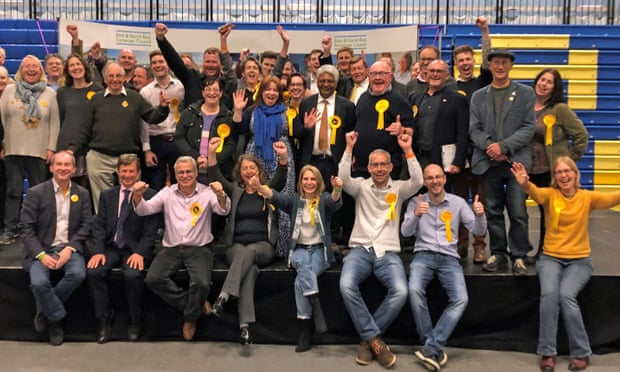
Today's local election results sends a clear sign of the country's view on Brexit, which risks the future of Labour and the Conservative party. Big swings to the Liberal Democrats and Greens - two parties which unequivocally support a People's Vote - shows that a People's Vote is the only solution to the political crisis that we're in. Meanwhile, UKIP have lost approximately 100 seats, dramatically proving that Brexit is no longer the will of the people. The losses suffered by Labour and the Conservatives show that both parties need to recognise the growing apathy with this Brexit process - both from people who voted Leave and Remain in the last referendum.
From European Movement
Twinning for winning: A grassroots European Union
Your local paper wants to hear from you
The EU is not punishing the UK
Brexit News
Tories and Labour suffer Brexit backlash as Lib Dems gain in local elections
EU students studying in England will see tuition fees 'skyrocket' after Brexit
This ‘People’s Vote Test’ website shows why Labour needs to get its act together
Three years of political uncertainty have taken their toll on the SME construction sector
Cabinet ministers split over customs union Brexit deal with Labour
'Significant regression': MPs blast government's post-Brexit environmental protection plans
Tweet of the Week
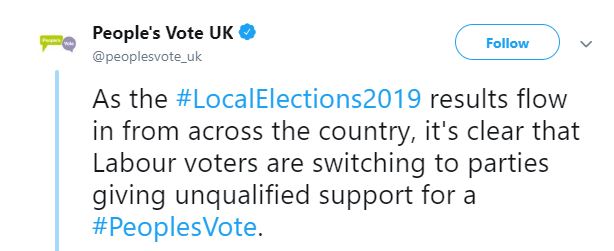
After the success of the local elections, the People's Vote campaign has highlighted the hit that Labour. Polling as already shown that the majority of Labour voters support a public vote on Brexit, and this has been confirmed by the Labour election result. This twitter thread highlights councils with big swings from Labour to parties that clearly back a People's Vote.
Brexit Comment
While Brexit is ongoing, climate change will never get the attention that it desperately needs
Why aren’t remain-backing parties doing more to attract young people?
European Movement Members' Event
Attend this European Movement lecture by Frances O’Grady General Secretary of the TUC on the theme Brexit: what next for workers?
What parties in your region support a People's Vote?
With the European Parliamentary Elections taking place this month, the People's Vote campaign has made it even easier to find out what parties in your area support a People's Vote so that you can make a more informed decision. Use this handy tool, which takes only a couple of seconds:
On a last note....
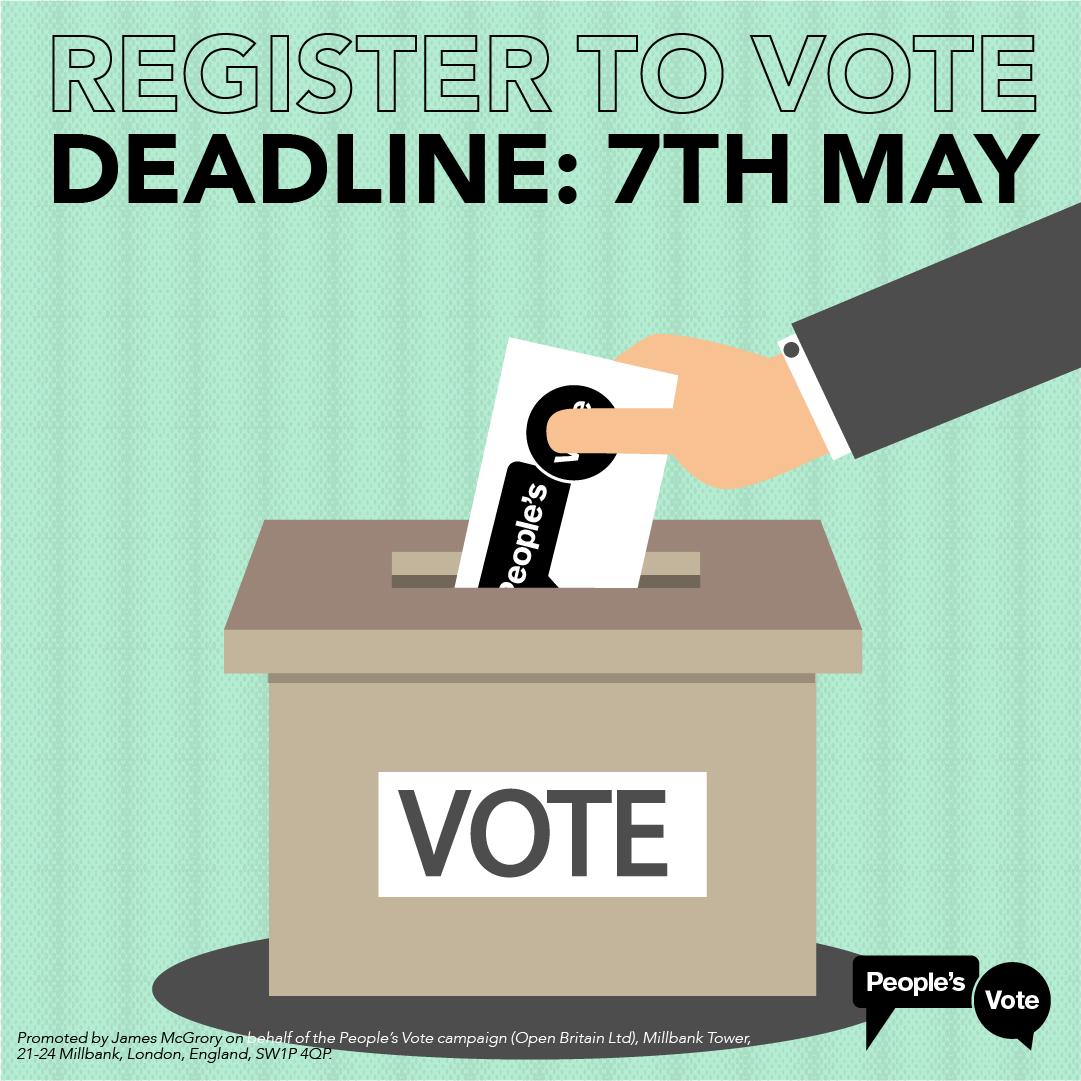
Don't forget to register to vote! The deadline for registering to vote in the EU elections is this Tuesday, and voting for pro-EU parties is vital. Click the image below to register to vote.
{% if recipient.tags contains "m_monthly" or "d_monthly_donor" %}
Thanks for your regular contributions to our work - none of this would be possible without you! If you'd like to help us a little more, please chip in a donation below or share the link with a friend and ask them to help our campaign!
|
{% else %}
Thank you for helping us fight Brexit through your membership {{recipient.first_name}}. If you'd like to help us build up the campaign at its most critical time, can you add a monthly donation to give us that extra boost?
|
{% endif %}
26th April Insider Briefing
May 07, 2019
Your weekly Briefing rounds up a selection of Brexit-related news from the UK, the rest of Europe and beyond. Click on the blue links for the full article.
As political parties gear up for the European elections, it's becoming clear that the Labour Party's performance in the polls will be heavily dependent on the strength of their commitment to holding a People's Vote, especially after having to reprint their manifesto after realising it failed to mention the pledge of a referendum voted through at last year's conference.
In a week stacked with campaign launches, Change UK and the Liberal Democrats have both taken strong anti-Brexit lines to balance the posturing of UKIP and Nigel Farage's Brexit party.
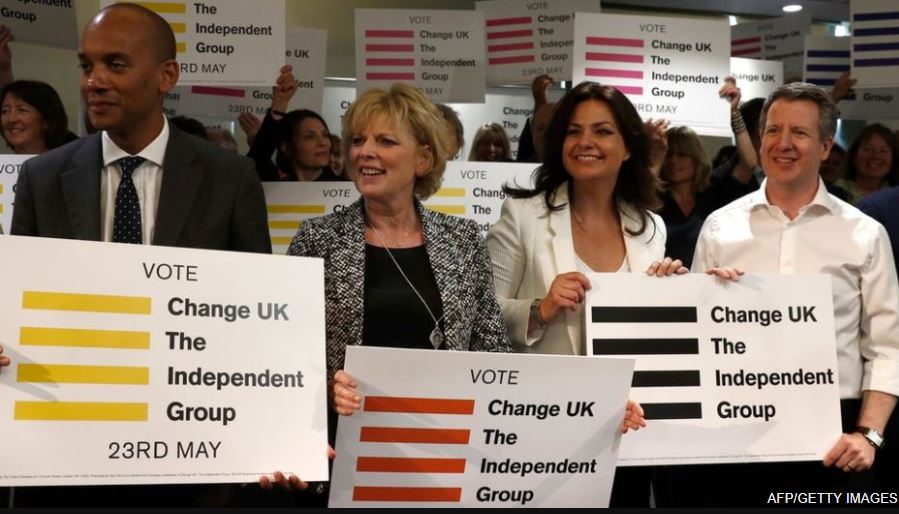
Join the Remain alliance, urges Change UK at Euro election launch
Labour to redraft European Parliament election leaflets
Lib Dems launch EU election campaign with 'Stop Brexit' message
From European Movement
'Brexit is wrong for us': Andrew Adonis interviews the new CEO of The European Movement
Pro-Remainers meet in Nottingham
European Movement Eastbourne Branch – After Dinner Speech - April 2019
Brexit News
Second referendum only way to beat Nigel Farage, warns Tom Watson
Fury As Corbyn European Elections Leaflet Suggests Labour Backs Brexit
Theresa May warned her post-Brexit immigration strategy could close quarter of NHS services
Tweet of the Week
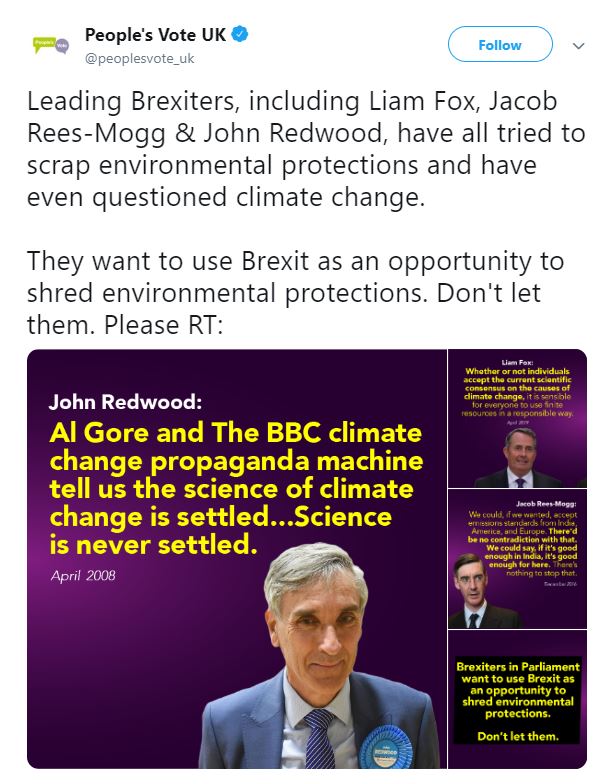
This People's Vote UK tweet showcases the risk of the environmental protection under leading Brexiters, and the potential damage that Brexit could have on protecting the environment.
Brexit Comment
Labour can stop the poisonous Brexit Party winning if we back a People’s Vote Seb Dance, The Times (£)
Labour should leave government talks and campaign in the European elections Paul Mason, New Statesman
There will be no soft Brexit now. It’s no deal or another vote Martin Kettle, Guardian
The EU Elections Could Be A Lifeline For Remainers – Unless We Throw It Away Chris Whiting, Huffpost
Video of the Week
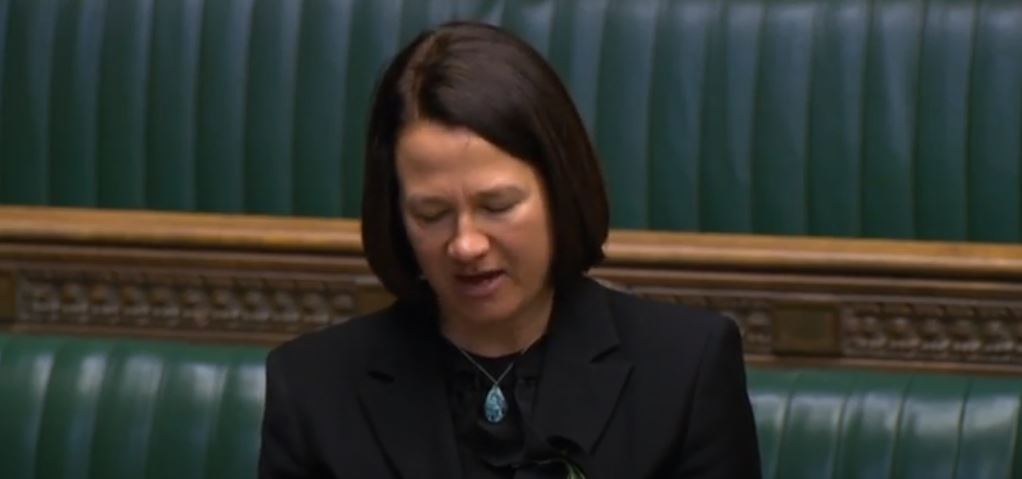
Shadow foreign minister Catherine West highlights the difficulty of EU citizens being able to register in the EU elections, saying "the government's complete lack of action have helped create an artificial barrier to the enfranchisement of EU citizens." Click here to watch the video
12th April Insider Briefing
May 07, 2019
Your weekly Briefing rounds up a selection of Brexit-related news from the UK, the rest of Europe and beyond. Click on the blue links for the full article.
The EU has given Theresa May a six-month Brexit extension, to Halloween. But the Prime Minister’s own political future hangs in the balance, with growing insurrection in the ranks of her Conservative Party and little sign of a deal emerging in talks with the Labour opposition. All roads forward appear blocked. Labour MPs are pressing for a People’s Vote and, increasingly, prominent figures who have backed leaving the EU are now publicly parting ways with the project. Many newspapers succumbed to the metaphor offered by the holding of brexit talks on the same day scientists reveal first images of a black hole in space (See final item).
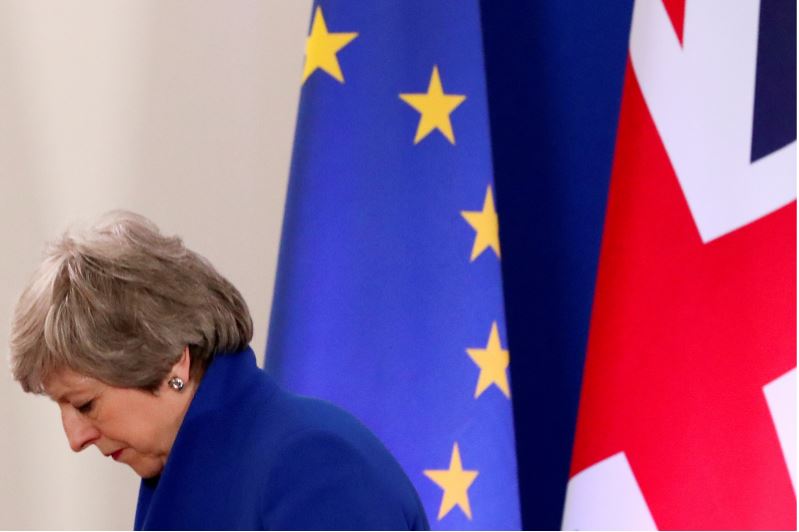
(Reuters) Theresa May leaves a news conference in Brussels in the early hours on Thursday
The EU’s new October extension finishes off May and her deal (Tom Tibasi, Guardian)
Britain will remain as a member state of the EU until 31 October, with the option to leave earlier if Theresa May can secure Commons support for the Brexit deal, after a Franco-German carve-up of the UK’s future. Donald Tusk told the UK 'don't waste this time'.
I was a strong Brexiteer. Now we must swallow our pride and think again (Peter Oborne, Open Democracy)
“It’s nearly three years since I, along with 17. 4 million other Britons, voted for Brexit,” writes journalist Peter Oborn. “Today I have to admit that the Brexit project has gone sour... It has turned Britain into a laughing stock. And it is certain to make us poorer and to lead to lower incomes and lost jobs.”
Picture of the Week
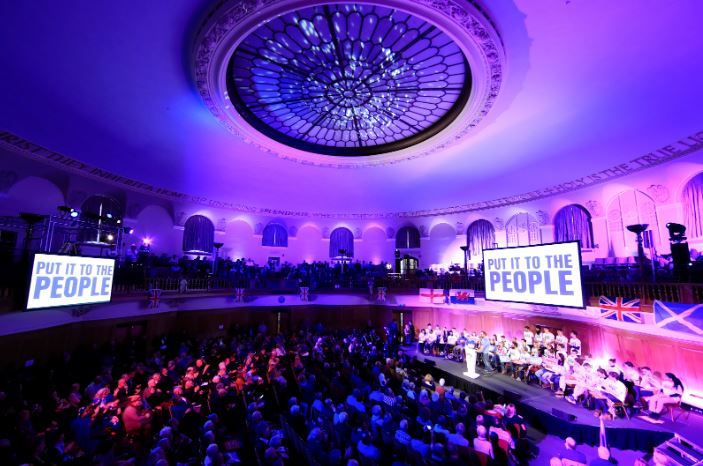
(Reuters) A rally in London this week calling for a People’s Vote on Brexit
From InFacts
Fox is right; we’re better off at the table than on the menu (Hugo Dixon)
Nick Ferrari makes killer case for slamming brakes on brexit (Luke Lythgoe)
Peter Oborne has turned against brexit; others should follow (Nick Kent)
Brexiters have only themselves to blame for UK humiliation (Luke Lythgoe)
Brexit rhetoric: fairness, fallacies and false analogies (Peter Millican)
EU should pay no attention to Rees-Mogg (David Hannay)
Dear Conservative MPs, It’s time to back a public vote (Nick Kent)
More Brexit News
Pro-Europeans must unite around the opportunity of the EU elections (Vince Cable, FT £)
Brexit has brought about at least two paradoxes. One is that Brexit has fomented in Britain the biggest pro-European movement on the entire continent of Europe. A second is that no matter what form of Brexit is chosen — if one is ever agreed — the UK is likely to continue following EU law.
Leaving London: Voices from the financial front lines of Brexit(FT £)
A so far relatively limited number of financial services companies have concluded that the potential disruption of Brexit means they need to expand elsewhere in the EU, anticipating the loss of passporting rights that permit them to access clients across Europe. The FT looks at the effect this trickle of new arrivals is having on property prices, international schools and other living conditions in six European cities.
Tweet of the Week
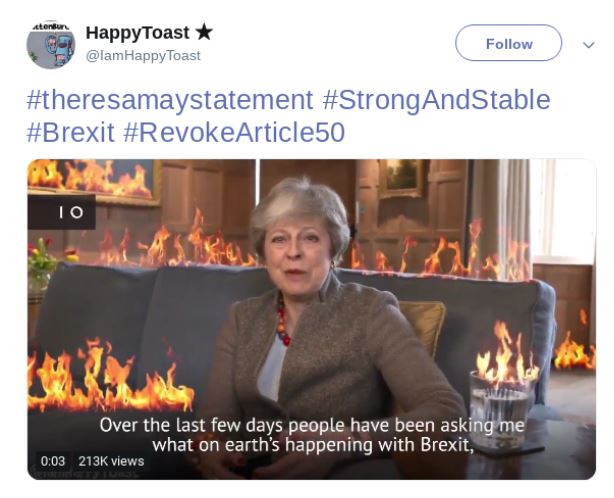
A fun take on Theresa May's cosy "fireside chat" video over the weekend. Click here to watch the video on loop.
Brexit ‘already causing medicine shortages’ at pharmacies in England (Guardian, Times)
Brexit has contributed to a shortage of certain medicines at pharmacies in England, according to a body that represents the sector. It comes as a medical charity says anxiety over drugs shortages has risen among epilepsy patients because of Brexit, potentially causing them further health issues.
Opera and Brexit in London (New Yorker)
Larry Wolff, professor of history at New York University, finds unsettling echoes of Brexit in Covent Garden performance of Giuseppe Verdi’s opera ‘La Forza del Destino’. “In London as, perhaps, also in New York, we may be moving between the artistically conceived passions of the opera house and the demagogically driven crises of our own political nightmares for some time to come.”
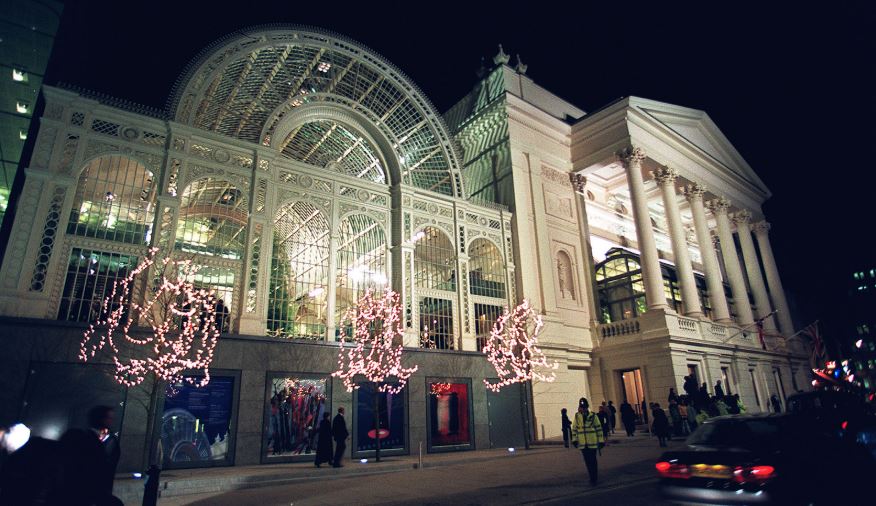
(Reuters) The Royal Opera House, Covent Garden
DUP says PM's 'pleading is humiliating' (BBC)
Arlene Foster, leader of the DUP party that gives Theresa May her majority in parliament, criticised the Prime Minister saying she "needed to be strong, she needed to show leadership, and I'm sorry to say that hasn't been evident in this past couple of months".
Quote of the Week
“Let me finish with a message to our British friends: This extension is as flexible as I expected, and a little bit shorter than I expected, but it's still enough to find the best possible solution.
“Please do not waste this time.”
Donald Tusk reveals the terms of the UK’s second Brexit extension at a press conference in the early hours of this morning.
Brexit Comment
Brexit-distracted Tories lose voter trust on core issues: poll (Politico)
In swing seats across the country, the Tories are trailing Labour on the central issues people most care about, the new POLITICO-Hanbury tracker poll conducted in battleground constituencies has found.
If Corbyn helps the Tories deliver Brexit, it will be a disaster for Labour (Michael Chessum, Guardian)
Delivering Brexit means setting yourself against a mass movement, a million of whom have marched and 6 million of whom have petitioned for the outright revocation of article 50. Labour cannot expect to demoralise its activist base by choosing to implement a policy they regard as a fundamental affront to their values, and then just talk about school funding instead.
The Future of Brexit
Black hole pictures unveiled amid crunch EU talks in perfect Brexit metaphor (Mirror)
One of them is a monstrous gravitational vortex from which nothing can escape, and the other is a black hole.

(Reuters) First images of a ‘black hole’ revealed at a news conference by scientists
5th April 2019 Insider Briefing
May 07, 2019
Your members' weekly briefing rounds up a selection of Brexit-related news from the UK, the rest of Europe and beyond. Click on the blue links for the full article.
And you can keep up with all the big issues in the Brexit debate by signing up to the InFacts daily newsletter.
Has Theresa May finally abandoned the hardliners in her party? This week she sought help from Opposition leader Jeremy Corbyn to build a joint Brexit proposal, just days before the UK must appeal to the EU for another Brexit delay. Fury among Conservative Party members who see it as a ‘betrayal’ of Brexit, but division also among Labour MPs over whether Corbyn should use the breakthrough to seek a People’s Vote on any resolution. As things stand, the UK could yet crash out on April 12 if the 27 other EU countries do not agree unanimously to an extension. Meanwhile chaos reigns in Parliament and disarray spreads among businesses and government departments suffering serious damage and craving stability.
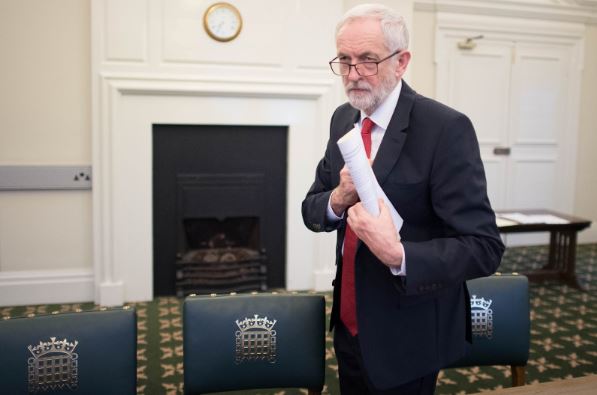 Opposition leader Jeremy Corbyn in parliament ahead of talks with Prime Minister Theresa May (Reuters)
Jeremy Corbyn told to demand a second referendum in any deal with Theresa May (inews)
Jeremy Corbyn is under increasing pressure from senior Labour MPs to demand a second referendum as the price for any deal with Theresa May. The Prime Minister also faces calls from retired civil service chiefs and Tory-supporting business leaders to put any agreement on extending Article 50 to a public vote.
The United Kingdom has gone mad (New York Times)
What we’re seeing is a country that’s determined to commit economic suicide but can’t even agree on how to kill itself. It is an epic failure of political leadership.
European press reaction to May’s Brexit initiative (Stern)
Poker. Political high-wire act. Sensational U-Turn. The final gamble of a prime minister who has reached the end. (German)
Ex-Tory MP hits out at 'cowardly' cabinet (BBC)
Former Conservative MP Nick Boles accuses the cabinet of being "cowardly and selfish" for failing to challenge Theresa May's approach to Brexit. No-one who has served in her cabinets is fit to stand for future premiership.
From InFacts
Tusk speaks for UK citizens rights even if PM won’t (Quentin Peel)
Pro-Europeans are true patriots and democrats, not Brexiters (Hugo Dixon)
Norway and Labour Brexits aren’t the same but both are bad (Luke Lythgoe)
European elections in the UK; bring them on (Quentin Peel)
MPs must listen to Im marchers and put Brexit to the people (David Hannay)
From European Movement
Portsmouth and Chichester marches
South West Surrey joins the People's Vote March
Tweet of the week
From FFS co-founder Amanda Chetwynd-Cowieson
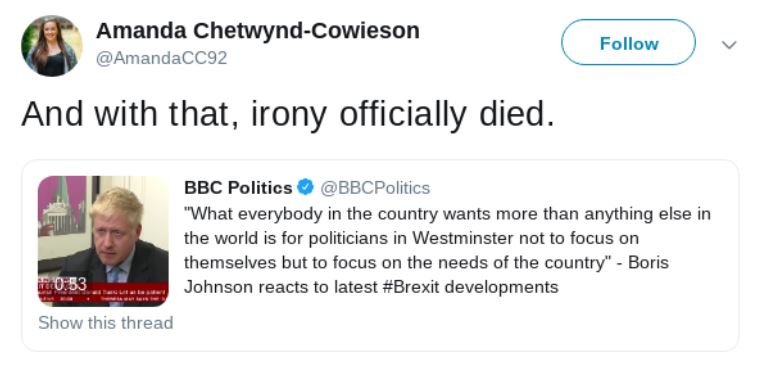
Quote of the Week
“The world is watching, and where the UK used to be a beacon for stability, we are now becoming a laughing stock.”
Juergen Maier, chief executive officer of Siemens UK, laments the UK’s reputation amongst global business in a letter to Politico.
Brexit Comment
May’s bombshell means the Little English nationalist revolution is over (Guardian)
In effect, May has bottled out of a fourth “meaningful vote”, ditched the threat of no deal completely and, in a desperate attempt to avoid an election, has thrown herself on the mercy of parliament. It should show no mercy.
Goodbye EU, and goodbye the United Kingdom (Financial times)
The invented identity of ‘Britishness’ is unravelling as English nationalism takes hold...Goodbye to Brussels is shaping up as the first act in a two-part drama. The second may well wave goodbye to the UK.
EU citizens in the UK must not be stripped of their rights after Brexit (Harriet Harman, The House)
The Immigration Bill leaves EU citizens in limbo after Brexit. Promises of future action and soothing words from ministers is not enough - legislative protection must be guaranteed.
Labour have no reason to rescue May - they can relax and watch the Tories implode (Nick Timothy, Telegraph)
Since erasing her Brexit red lines, Theresa May has struggled to avoid the fate of Sir Robert Peel, the nineteenth century prime minister who split the Tories and consigned them to opposition for three decades. But the offer she made to Jeremy Corbyn on Tuesday – to decide the terms of Brexit together – risks blowing the Conservatives to smithereens.
More Brexit News
'Totally unacceptable': MoD criticises troops after Corbyn picture used in target practice (Sky)
A Snapchat video showing the Labour leader's image used during target practice has been widely shared.
Police warn MPs and campaigners not to inflame tensions (BBC)
Chairman of the National Police Chief Council Martin Hewitt says the UK is in "an incredibly febrile atmosphere" as a result of debate over leaving the EU and there is a lot of "angry talk" on social media. "I think there is a responsibility on those individuals that have a platform and have a voice to communicate in a way that is temperate and is not in any way going to inflame people's views."
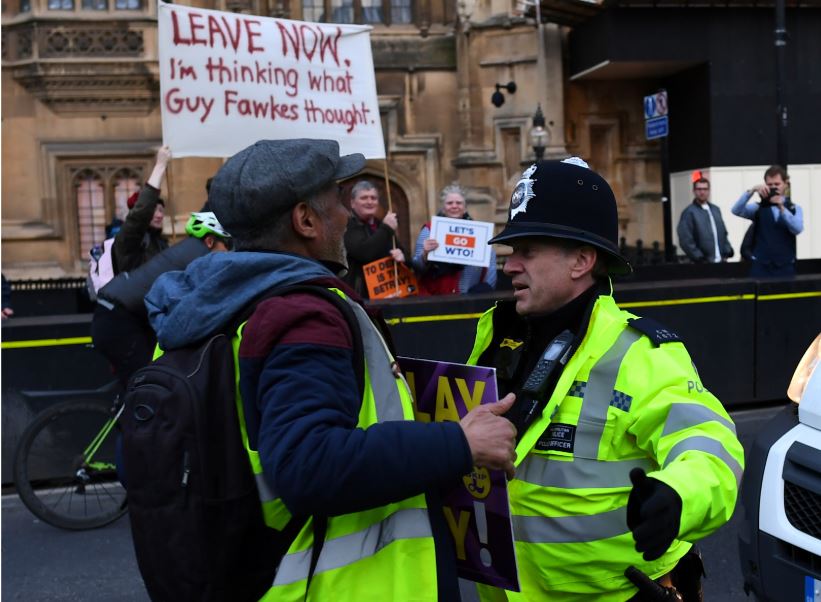
UK has become a laughing stock over Brexit, says Siemens boss (Times)
Jürgen Maier, chief executive of Siemens in the UK, said Brexit was “exhausting” the company and destroying the country’s “tremendous reputation as an economic powerhouse”.
Theresa May in quotes: from ‘Brexit means Brexit’ to I quit (Washington Post)
Theresa May is the “Brexit Means Brexit” prime minister. For almost three years since Britain voted to leave the European Union, May repeated the mantra that she would deliver the departure. But time and circumstance have made her change her words.
If only bums on glass was the oddest thing to happen in parliament this week (Guardian)
Theresa May’s Brexit manoeuvres make Extinction Rebellion’s semi-naked protest look like an outbreak of sanity.
Classical Brexit
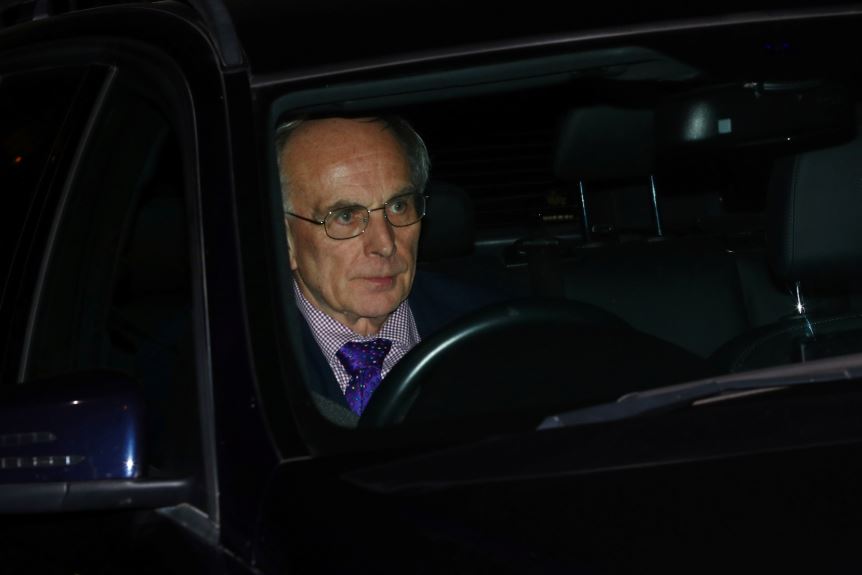
Conservative MP Peter Bone driving out of parliament during a week of turmoil. (Reuters)
30th March 2019 Insider Briefing
May 07, 2019
Your members' weekly briefing rounds up a selection of Brexit-related news from the UK, the rest of Europe and beyond. Click on the blue links for the full article.
A million marched in London calling for a People’s Vote. Over five million have signed a petition on Parliament’s website calling for the revocation of Article 50. Meanwhile Theresa May agreed to resign if Brexiter Tory MPs pushed her withdrawal deal through at a third attempt this week. But they didn't. Leading Tory figures including Boris Johnson agreed to back her, but within hours her hopes were dashed when Northern Ireland’s DUP said it could not endorse the deal.
On Wednesday evening MPs held a series of votes in an attempt to reach consensus on a plan for the UK’s future relationship with the EU - a question left entirely open in the political declaration May agreed. No proposal gained a majority but the House will reopen its efforts probably on Monday. As things stand, the UK could yet crash out without a deal on April 12.
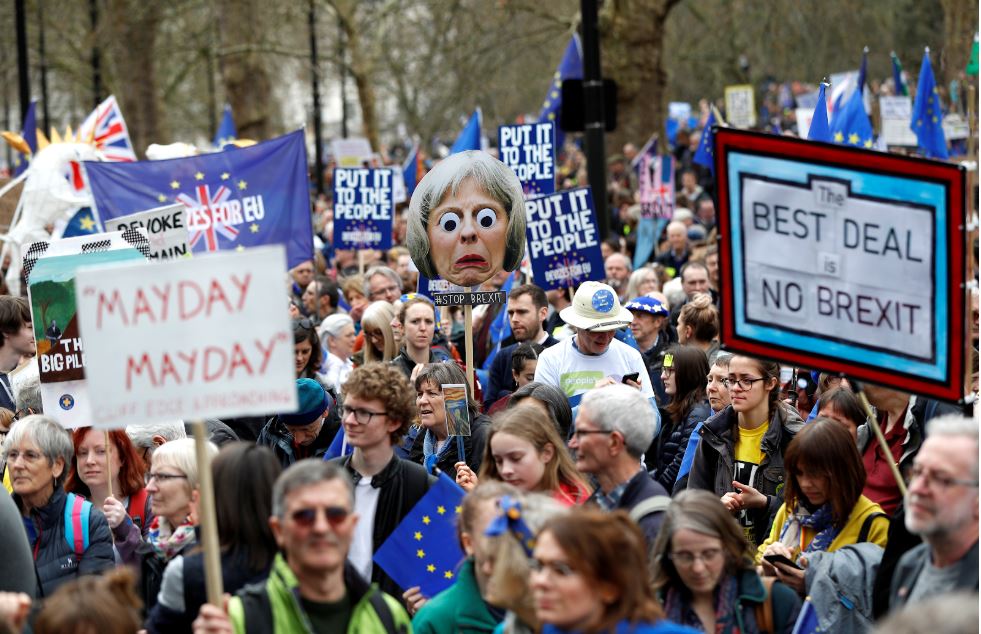
Britain’s New Europeans (New Statesman) Brexit, a calamitous act of national self-harm, has achieved what no liberal politician could: the creation of Europhile demos. History suggests that the consequences will be profound and unexpected. Pro-Europeans have already reshaped UK politics.
Limbo remains despite May's grand gesture (BBC) For our politics, for businesses trying to make decisions, for all of us, divisions and tensions between and inside our government - and our Parliament - are too profound to bring this limbo to an end.
A packed room and MPs in tears: Behind the scenes at the 1922 meeting where Theresa May announced her resignation (Telegraph) The 1922 meeting was so packed that one late arrival - Penny Mordaunt, the International Development secretary - was left standing in the House of Commons committee corridor, trying to listen through the keyhole.
Leave campaign chief Dominic Cummings in tirade at ‘narcissist-delusional’ Brexiteers (Times) The director of the 2016 Vote Leave campaign issued a vicious critique of hard Brexiteers, calling them “useful idiots for Remain” and likening them to a “metastasising tumour”. Dominic Cummings took his antagonism with former colleagues to a new level as he accused them of forming views simply so that they could get on the radio.
From the Floor of the House
“Consider the consequences for trust in politics if this House forces an outcome on the people that they no longer desire. That really would be the undemocratic establishment stitch-up of all time.”
-Margaret Beckett MP on case for public vote
From InFacts
Tusk speaks for UK citizens rights even if PM won’t (Quentin Peel)
Pro-Europeans are true patriots and democrats, not Brexiters (Hugo Dixon)
Norway and Labour Brexits aren’t the same but both are bad (Luke Lythgoe)
European elections in the UK; bring them on (Quentin Peel)
MPs must listen to Im marchers and put Brexit to the people (David Hannay)
From European Movement
European Movement 1066 attends the People's Vote March
Veterans for Europe attend the People's Vote March
Worcestershire for Europe joined 1,000,000+ for the People's Vote March
The biggest pro-European March in History
More Brexit News
The PM must heed the million marchers and put a brake on Brexit (Dominic Grieve, Evening Standard)
By refusing to consider going back to the public, and trying to close down the possibility of a People’s Vote, the prime minister and like-minded parliamentary colleagues are doing our country a grave disservice. They are contributing to the political paralysis which they condemn because it takes off the table the one proposal that could give clarity to what the public want.
Video of the Week
WATCH: Aerial footage from the BBC of the weekend anti-Brexit demo in London.
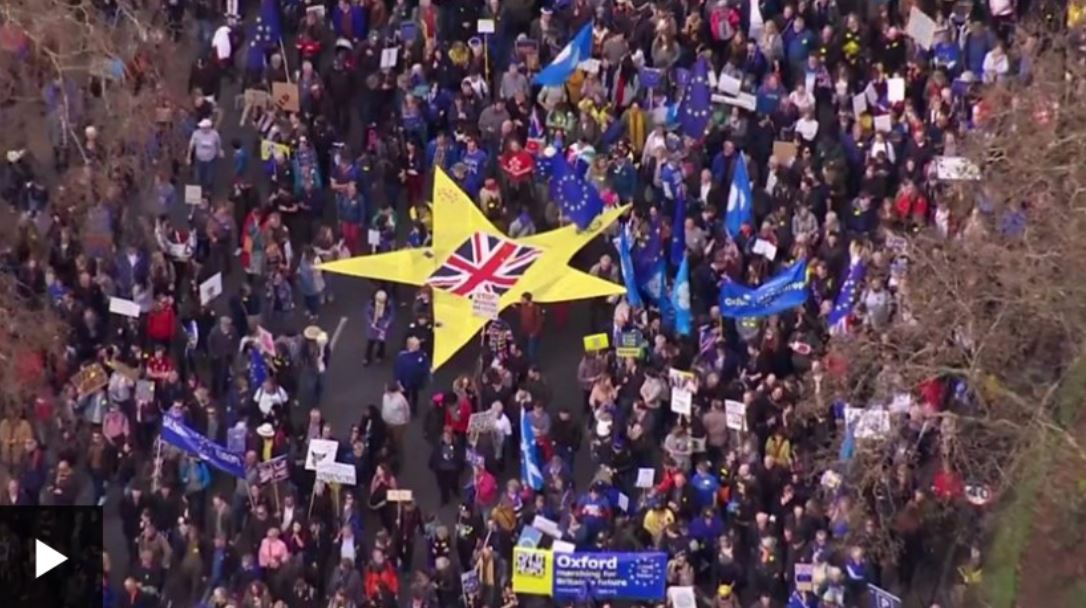
Voices from the march: ‘I'm fed up with hearing May talk about who voted to leave’ (Observer)
“Brexit is disastrous for our country. I’ve not been on a march since 1962 when I marched out of the army. However, I felt very strongly that I had to come here today.”
Mandarins and ministers braced for full public inquiry into Brexit (Sunday Times)
Politicians and civil servants are expecting a Chilcot-style inquiry into the Brexit negotiations after a week of blame and recriminations over the prime minister’s stalled deal.
Brexit: Firms tell MPs to 'stop chasing rainbows' (BBC)
British Chambers of Commerce director general Adam Marshall: "Three years going round in circles... is long enough...To Westminster we say: We are frustrated. We are angry. You have let British business down. You have focused on soundbites, not substance. Tactics, not strategy. Politics, not prosperity," he is set to say in a speech, the text of which has been released.”
NatCen polls shows popular move against Brexit
The longer the Brexit process has gone on, the more critical and pessimistic voters have become. Indeed, Leave voters have emerged from the process almost as critical of its handling and of the outcome as those who voted to Remain.
Quote of the Week
“Walk tall. Keep the faith. Go back to your villages, your towns and your cities. Tell them you were here. Here, in Parliament Square. Outside the buildings that inspire parliamentary democracy. Fighting for our tomorrow. In peace. Secure. The bitterness and bloodshed of Europe’s past buried with its history.”
Former Conservative deputy PM Michael Hesseltine made one of the most powerful speeches at the People’s Vote march.
Brexit Comment
Brits pretend they’re sick of Brexit but truth is they’re obsessed (Washington Post)
Your average Brit will tell you they’re sick and tired of Brexit, that the country has had enough, it’s knackered. But clearly, they have not had nearly enough. Britain is obsessed with Brexit.
To avert this Brexit disaster, MPs must smash the party system (Guardian)
Brexit has changed the political map and the old structures can no longer contain the crisis.
How the UK lost Brexit battle (Politico)
Britain mishandled Brexit negotiations from the start, entering into a series of miscalculations and capitulations that undermined its position. “The story that emerges is of a process in which the EU moved inexorably forward as Westminster collapsed into political infighting, indecision and instability.”
Brexit at the Proms
Royal Albert Hall soprano told to change her 'EU flag' dress (Telegraph)
Soprano Anna Patalong wore yellow and blue with a distinctive necklace of stars, in what appeared to be a defiant message to the electorate through the prism of classical music at the Royal Albert Hall. Concert organisers, determined the night not be hijacked by disagreements over Europe, asked her to change.
Click on picture link to see video of Ms Patalong reconfiguring Rule Britannia to the unofficial EU anthem Ode To Joy during the concert at the Albert Hall.
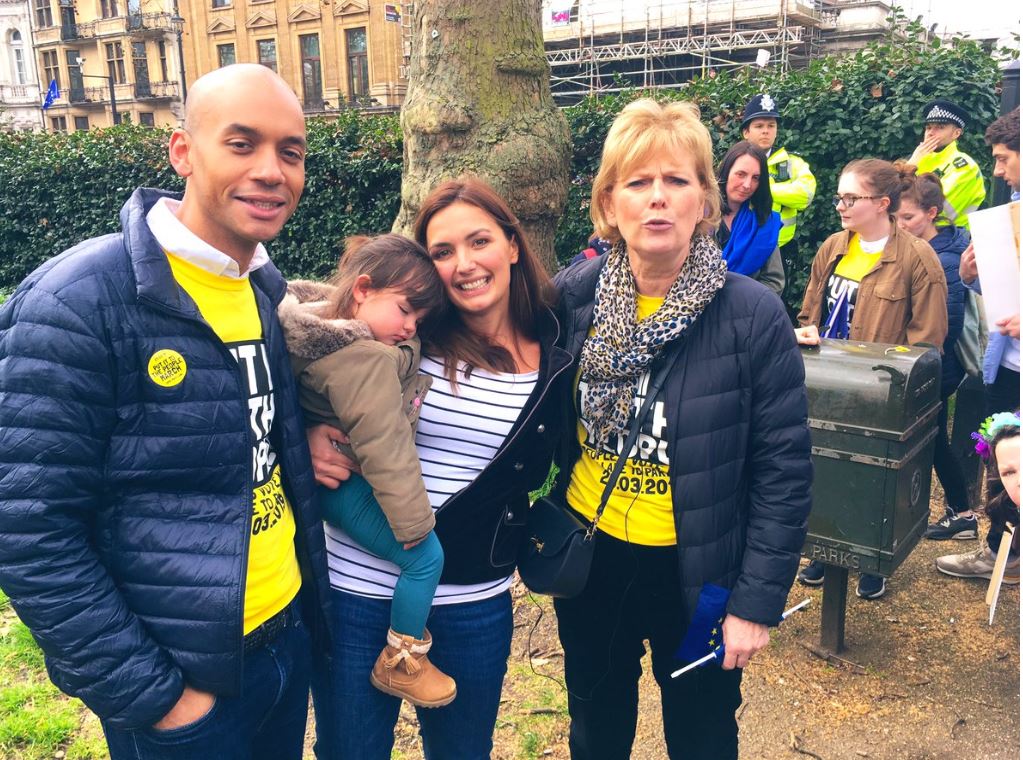
Soprano Anna Patalong with People’s Vote campaigners Chuka Umunna and Anna Soubry at Saturday’s referendum demonstration. (Twitter)
22nd March 2019 Insider Briefing
May 07, 2019
Your members' weekly briefing rounds up a selection of Brexit-related news from the UK, the rest of Europe and beyond. Click on the blue links for the full article.

Hundreds of thousands of people are heading to London for the Put It To The People march, with crowds assembling from 12 noon on Park Lane. There’s never been a more vital time for such a demonstration. Following a meeting at the EU summit - during which our prime minister was described as a “vacuum” - the other 27 EU leaders have offered to extend the Brexit deadline at least to April 12. No-deal chaos next Friday has been averted. Now we must defeat Theresa May’s deal once and for all. Then we must seek a longer extension to work out what Brexit we can actually agree to - and ultimately put it to the people.
When is the Put It To The People protest and where will it take place? (Independent)
Everything you need to know about Saturday’s event here. Let’s make history!
'It was not clear if she had a plan at all': how May's night at the summit unfolded (Guardian)
“It was 90 minutes of nothing,” one EU source said. “She didn’t even give clarity if she is organising a vote. Asked three times what she would do if she lost the vote, she couldn’t say. It was f***ing awful. Dreadful. Evasive even by her standards.” And there’s plenty more of that in this Guardian roundup.
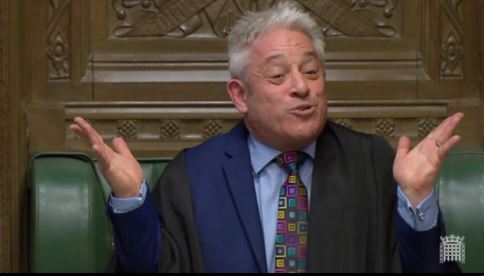
Scapegoat or hero? British parliamentary speaker John Bercow (New York Times)
A measure of the strangeness of the times in Brexit Britain is that one can buy T-shirts bearing the face of John Bercow, the speaker of the House of Commons, in the stylised stencil preferred by street artists and skateboarders, with the word ORDER.
 (Reuters)
From InFacts
Parliament in turmoil but what do the public think? (Luke Lythgoe)
Now let’s take EU extra time and get a People’s Vote (Jenny Sterne)
We must revoke. But first let’s get a People’s Vote (Luke Lythgoe)
It’s not deal versus no-deal - Tusk didn’t say that (Hugo Dixon)
From European Movement
Banner making - St Albans for Europe gets creative for the Put it to the People March
Lord Adonis speaks to North Hampshire for Europe
European Movement Eastbourne - March 2019 Dinner
Call for Brexit being Put to the People - This Saturday
Video of the Week
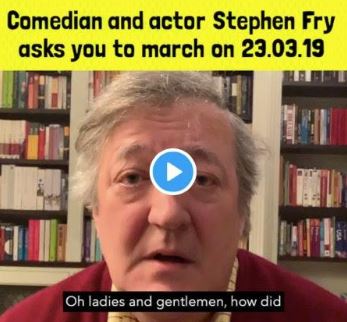
WATCH: Actor and comedian Stephen Fry is asking you to join the Put It To The People march in London this Saturday.
Brexit Comment
Brexit may have just killed the British constitution (Irish Times)
Even if Brexit is cancelled, the partisan politics it has brought about may make the UK constitution unworkable.
Britain’s Brexit crisis is rooted in the power of our public schools (Guardian)
Brexit should focus minds on how we begin to cut the ties that bind the state, politics and key professions – including journalism – to a tiny number of schools. The past three years of British history have proved that privilege often breeds a dangerous mixture of ineptitude and arrogance, as well as incubating the kind of unhinged ideas that could appeal only to people removed from ordinary life, who tend to see the world in terms of crass abstractions.
British science needs to remain open to the world after Brexit (Times)
As Brexit and a redesigned immigration system loom, we must make Britain an attractive destination for scientists. As the US-born chemical technologist Jason Hallett puts it: “By far the easiest way to cross-fertilise ideas is to hire people from other places, especially those with different research backgrounds.”
The Brexit farce: Shame on you, you British! (Die Welt)
“If it weren’t all so tragic, one could say with some justification: The Brexit comedy is reaching its provisional high-point. The negotiations… will go into history as a paramount example of the worst kind of dilettante maladministration.” (In German)
Radio of the Week
LBC radio’s James O'Brien believes the “Leave Means Leave March” from the north to London is a perfect analogy for Brexit - a few people abandoned in the rain by wealthy Brexiters who are warm and cosy back in London. Listen here.
 Brexit campaigner Nigel Farage pictured during 'Brexit Betrayal' march from Sunderland to London, shortly before he left the march (Reuters)
More Brexit News
Theresa May: The Prime Minister of humiliation (Der Spiegel)
A good summary of how other countries see Theresa May: Despite facing one embarrassment after the other, British Prime Minister Theresa May continues to plow ahead, seemingly undeterred. It's becoming increasingly clear that she is the main impediment to solving the Brexit mess.
Phil Wilson & Peter Kyle: Only our compromise can break the Brexit impasse (Guardian)
“Our own frontbench leadership is reaching a settled view that any Brexit deal – including its own – would only be approved by parliament on condition it goes back to the people. Backbenchers who have been adamantly opposed to a people’s vote are talking to us about how our compromise would work.” Labour MPs Phil Wilson and Peter Kyle explain their plan to break the Brexit deadlock.
Let’s make the Put It To The People march a positive story about how Britain can be renewed (Independent)
“When we march on Saturday, we will of course be marching against Theresa May’s miserable Brexit deal – and against crashing out of the EU with no deal at all,” writes Hugo Dixon. “But we also have a fantastic opportunity to march in favour of a positive vision for our country. In favour of a fair and open society, and in favour of honest politics.”
People's Vote march: 200 coaches heading to London (BBC)
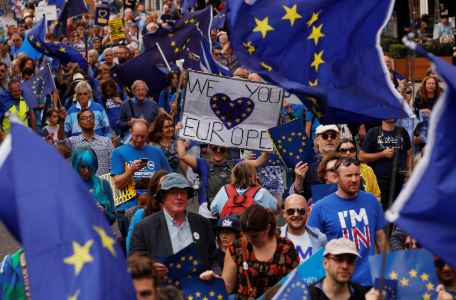 An anti-Brexit march held just after the 2016 referendum (Reuters)
‘Cordial’ chat fails to bring Johnson back into the Brexit fold (Times)
Theresa May spent 40 minutes trying to persuade Boris Johnson to back the deal on a day of top-level meetings across Westminster that failed to break the Brexit deadlock.
The choice facing British citizens living in Germany (BBC)
Instead of waiting to see what's in store, an increasing number of British people abroad are applying for citizenship in the European country where they live and work. Germany was the place that welcomed most new citizens from the UK in the year following the referendum.
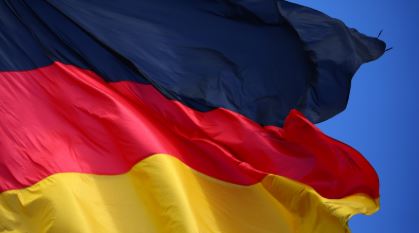 (Reuters)
Brexit food stockpiling loan ad banned (BBC)
A financial services company has been ordered not to reuse an advert in which it tried to persuade people to take out a loan, in case they wanted to stockpile food because of Brexit.
UK to lose £1tn of financial assets to Europe due to Brexit (FT)
Financial services companies have committed to move about £1tn of assets out of the UK into Europe as the industry triggers its worst-case contingency plans with no Brexit deal in sight, according to consultancy EY.
And finally… tweet of the week
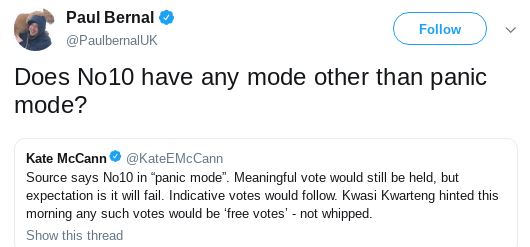
Paul Bernal’s response to Sky correspondent Kate McCann pretty much sums up where the government’s at right now.
11th January 2019 Insider Briefing
May 02, 2019
Your members' weekly briefing rounds up a selection of Brexit-related news from the UK, the rest of Europe and beyond. Click on the blue links for the full article.
You are cordially invited to subscribe to the People’s Vote campaign’s Morning Briefing. Click here to sign up.
MPs force Theresa May to table Plan B if she loses Brexit vote (Guardian)
Theresa May will be obliged to present MPs with a new Brexit plan within three days if her current proposal is voted down next week, after a procedural amendment to the plan’s progress through the Commons was passed amid chaotic scenes. Speaker John Bercow provoked fury from the Tory benches for selecting the amendment, which government sources alleged went against the advice of the House of Commons.
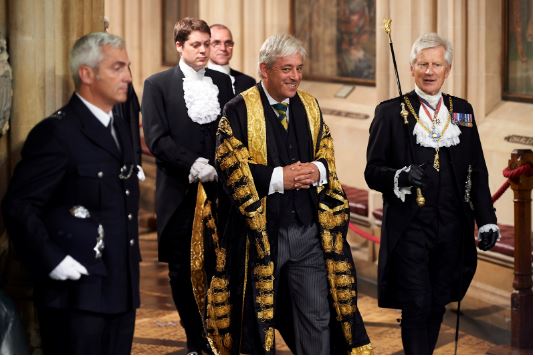 House of Commons Speaker John Bercow, here in full ceremonial attire, drew objections from Brexiters by allowing a vote on an amendment that effectively reduces the prime minister’s control over the Brexit process. (Reuters)
May seeks Labour support for Brexit deal with worker rights offer (FT)
The prime minister is stepping up efforts to win support from some Labour MPs for her Brexit deal by promising enhanced guarantees on the environment and workers’ rights.
UK ‘puts out feelers’ to pause Article 50 (Telegraph)
British and European officials are discussing the possibility of extending Article 50 amid fears a Brexit deal will not be completed by March 29, the Telegraph can reveal.
UK minister rules out Brexit process extension (Associated Press)
From InFacts
Bravo to MPs for stopping May running down the clock (Hugo Dixon)
Is Commons majority for People’s Vote starting to emerge? (Nick Kent)
Extra time without a People’s Vote is another fantasy (Hugo Dixon)
Expect turbulence if your flight is delayed after Brexit (Joel Baccas)
No, Boris, crashing out of the EU is not what people voted for (Luke Lythgoe)
From European Movement
The EU: Peace, Co-operation and Equality
How to convince your MP to support the People’s Vote (and why you should try)
From apathy to volunteering for the People's Vote campaign
Quote of the Week
“This is what has happened to our country.”
Pro-Remain Tory MP Anna Soubry, as she faces intimidation and shouts of “Nazi” outside Britain’s parliament.
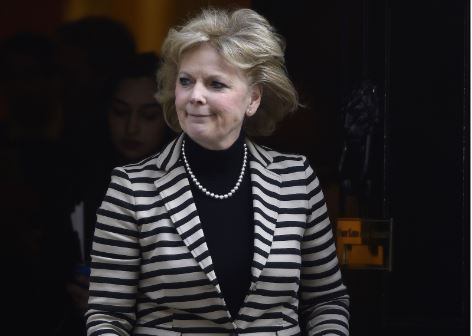 (Reuters)
And Chuka Umanna's response...
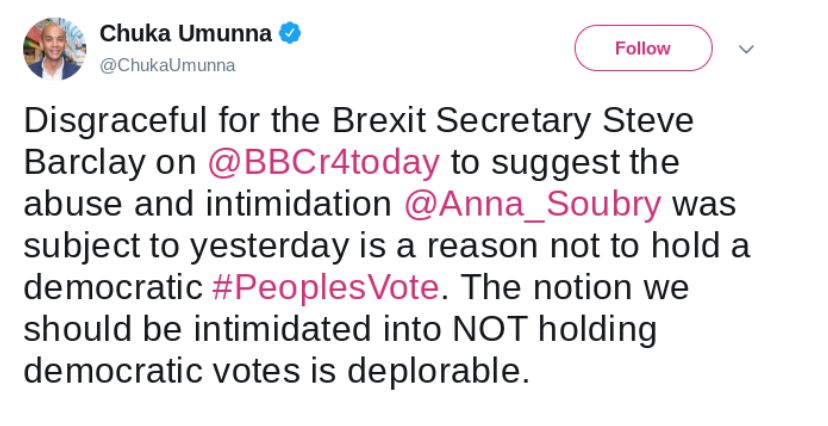
Brexit comment
Our uncivil war over Brexit was fuelled by deceit, not one oddball (Guardian)
“Watch Graham’s drama and weep,” writes journalist Anne Perkins. Channel 4 broadcasts James Graham’s dramatisation of the Brexit campaign focusing on Dominic Cummings the mastermind who stood behind the politicians and coined the winning slogans, such as “take back control”.
Labour faces mass exodus over Brexit policy (Observer)
Thousands of Labour members have demanded their party oppose Theresa May’s Brexit deal and backs a People’s Vote over EU membership. The call comes before a key party gathering which will be held amid warnings that some are already ending their membership over the issue.
This rotting cabinet (Conservative Home)
“Authority drains away from Theresa May’s government to Parliament...There is no Cabinet consensus about what to do if the deal goes down. This cabinet is firewood.”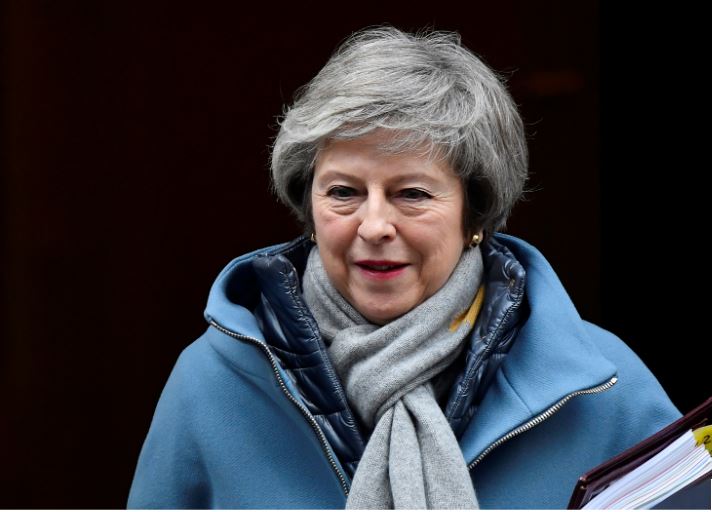 (Reuters)
Tweet of the Week
Young anti-Brexit activists stood outside Downing Street as MPs arrive for a cocktail party given by Theresa May to promote her Brexit deal.
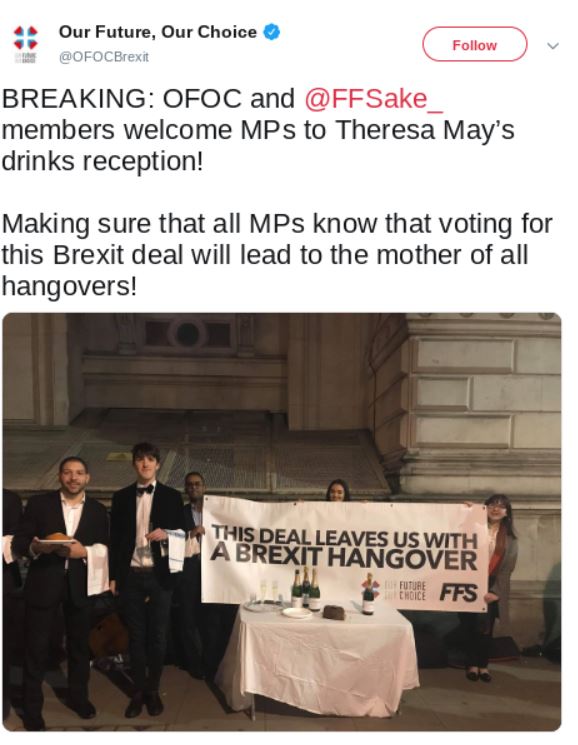
More Brexit News
Theresa May claims Brexit bonus will help fund new NHS plan (FT)
The prime minister says some of the “vast sums sent to Brussels” at the moment could help fund the NHS — a claim used by the Leave campaign in the 2016 referendum. But the government’s own analysis has shown that because the economy is likely to grow more slowly after Brexit than if the UK had remained in the EU, there would be less money for public spending.
Manston Airport hosts lorry park trial (BBC)
An exercise to test plans for border disruption in the event of a no-deal Brexit has been described as "too little too late" by hauliers. A convoy of 89 lorries took part in two test runs from the disused Manston Airport, near Ramsgate in Kent, on a 20-mile route to the Port of Dover.
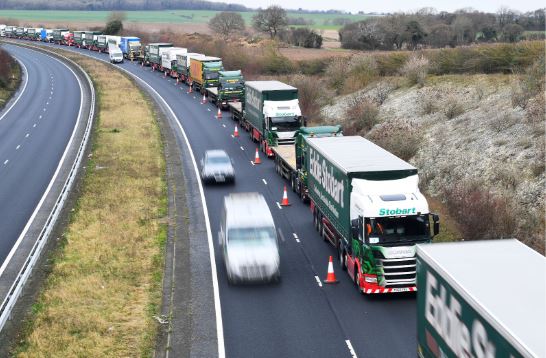 (Reuters)
World Bank warns of wider no-deal fallout (Guardian)
A no-deal Brexit will have a negative economic impact from Moldova to Morocco, as the shockwaves sweep eastwards across Europe and through trade links to North Africa, the World Bank has warned.
Jaguar Land Rover to lay off up to 5,000 workers (BBC)
The layoffs are part of a £2.5bn cost-cutting plan amid what industry insiders have called a "perfect storm".They mean a downturn in Chinese sales, a slump in diesel sales and concerns about UK competitiveness post-Brexit.
18th January Insider Briefing
May 02, 2019
Your members' weekly briefing rounds up a selection of Brexit-related news from the UK, the rest of Europe and beyond. Click on the blue links for the full article.
You are cordially invited to subscribe to the People’s Vote campaign’s Morning Briefing. Click here to sign up.
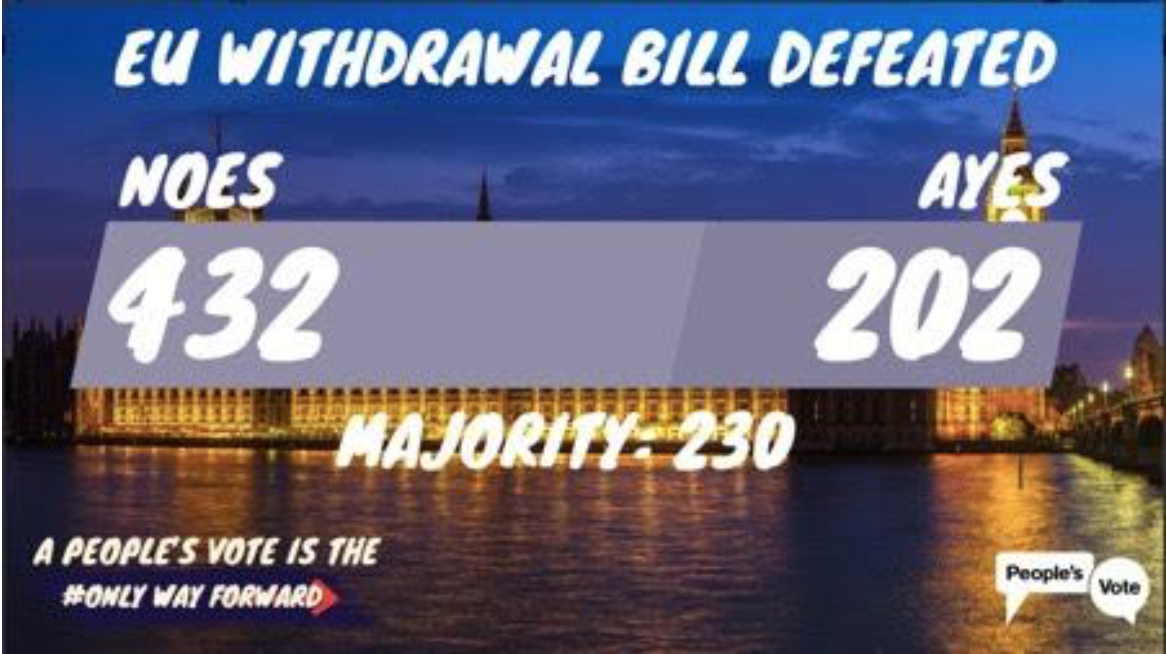
Theresa May’s Brexit deal was overwhelmingly rejected by parliament in a vote that united militant brexiteers and proponents of remain. With only ten weeks until the country is due to leave the EU, parliament is moving to seize effective control over the process from the executive. However, MPs are far from agreeing an alternative plan. Industry and commerce as well as opposition political parties are appealing to May to rule out a damaging no-deal brexit. The Prime Minister is continuing to reject any notion of a People’s Vote.
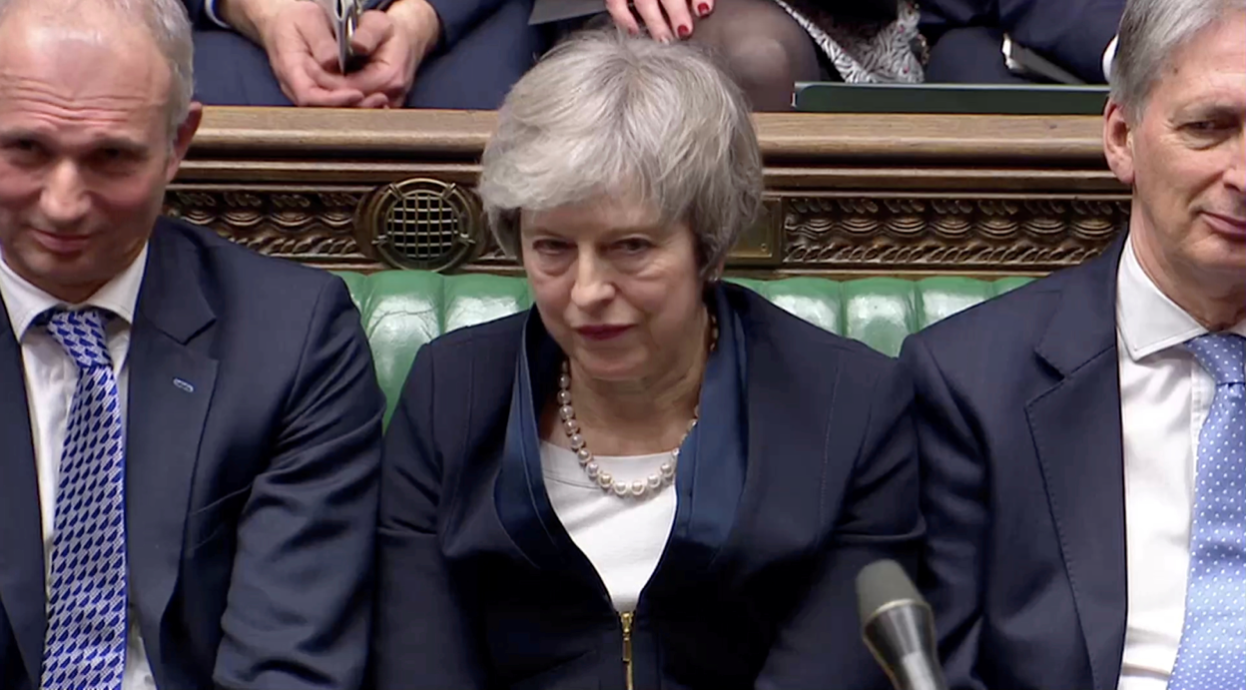
(Reuters) Theresa May in parliament after the announcement of defeat of her Brexit plan.
Theresa May experiences a historic parliamentary humiliation (Anne Applebaum, Washington Post)
Brexit has been a catastrophic political failure. This messy, unpopular deal, the most unpopular government policy that anybody can remember, was produced by a political class that turned out to be ignorant — about Europe, Europeans, trade arrangements, institutions — and arrogant, disdaining knowledge and expertise. It was the work of leaders who favoured identity politics over economics, who preferred an undefined notion of “sovereignty” to the real institutions that gave Britain influence and power, who believed in fantasies and scorned reality.
No-deal Brexit could be 'taken off the table', Chancellor Philip Hammond tells business leaders in leaked conference call (Independent)
Chancellor Philip Hammond told business leaders that a no-deal Brexit could be "taken off the table" and Article 50 "rescinded", according to a transcript of a leaked conference call obtained by the Telegraph.
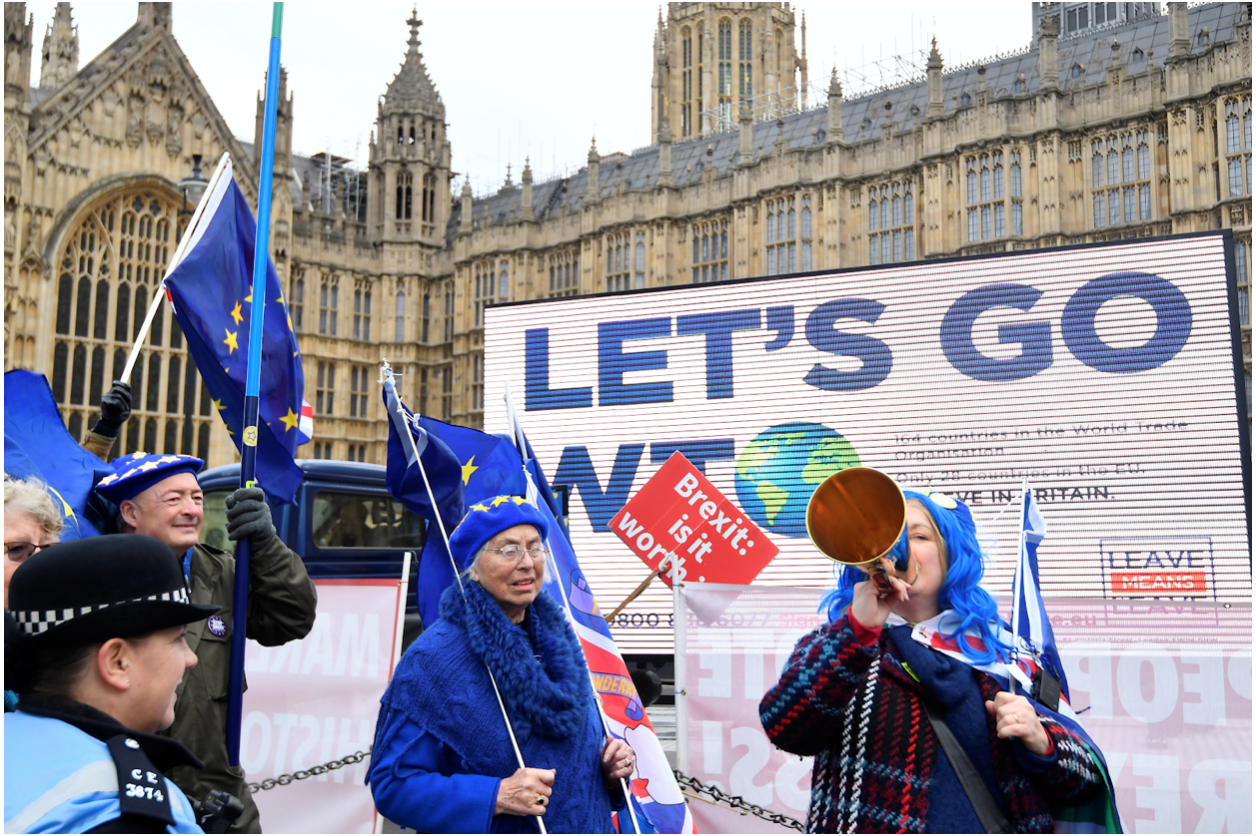 (Reuters) Anti-Brexit protesters stand next to a Pro-Brexit billboard outside the Houses of Parliament
The UK as an island of losers (Die Zeit, German)
The United Kingdom was supposed to leave the European Union “stronger, more just and more united” than ever before, a truly “global Britain” – that’s what Prime Minister Theresa May promised at the start of negotiations. Today in an eerie manner, the country has turned in on itself, it has seldom been as weak in its long history; a truly torn Kingdom.
BBC review of British newspaper reaction
Batten down the hatches; it’s time for a no-deal Brexit (The Sun)
The Sun says: We never wanted a No Deal... it would mean a tough and probably damaging few months, but it is the only solution left that defends our democracy.
'It's a shambles': the view from the country on Brexit now (Guardian)
A Guardian report finds a Britain sharply divided over Brexit as they speak to voters in three places that voted very differently in the 2016 referendum.
From European Movement
To Believe in the EU is to Take Pride in British Accomplishments
A meeting on Brexit with my local MP
From InFacts
We must stop no-deal. Here’s how (Hugo Dixon)
Now PM’s deal is defeated, everyone must stop wasting time (Luke Lythgoe)
MPs’ cunning plan for a committee more Baldrick than Lenin (Nick Kent)
Magnificent victory but lots of work to do (Hugo Dixon)
5 answers to hard questions from soft Brexiters (Hugo Dixon)
4 other times in history we had a stab at ‘Brexit’(Richard D Simmons)
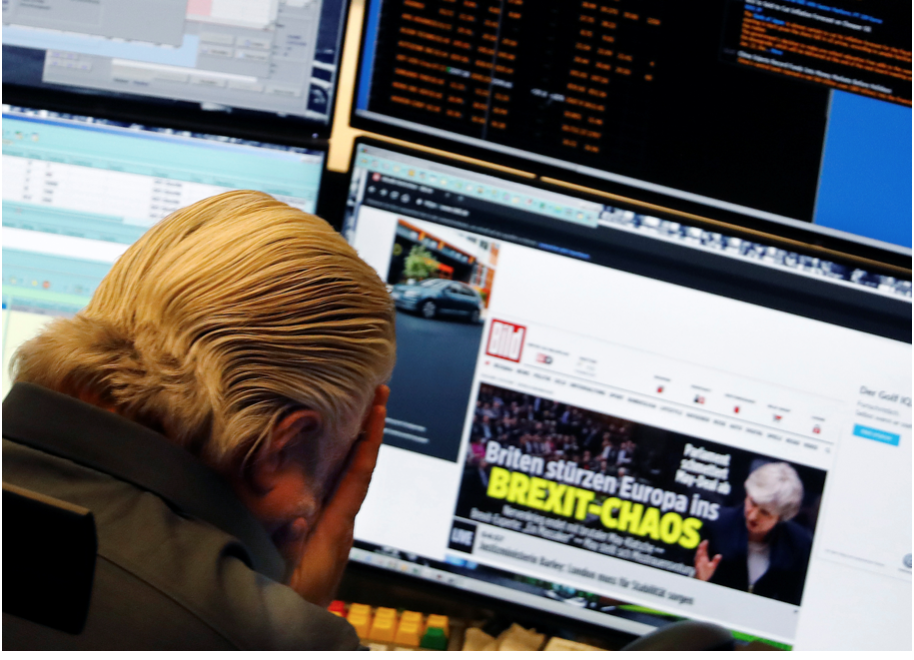
(Reuters) Frankfurt - A trader reacts to news of May’s Brexit defeat, reading the headline: “The British pitch Europe into BREXIT-CHAOS”
Brexit Comment
Amid Parliament’s Brexit Rebellion, a Tectonic Shift in How Britain Is Governed (Ellen Barry and Stephen Castle, New York Times)
The Brexit fiasco seems to be forcing a tectonic shift in how Britain is governed, as Parliament flexes its muscles and the Prime Minister struggles to force through her agenda — a dynamic more characteristic of America’s gridlock-prone system.
It’s time for parliament to wrest control from the zombies (Matthew Parris, Times)
“Theresa May isn’t any good, she doesn’t have a fiendish, secret strategy, she’s careless with the truth and will say anything to get her through another week. She doesn’t know what to do. Jeremy Corbyn is equally useless. He, too, is playing for time.”
Corbyn and Labour must now go hell for leather for another referendum (Polly Toynbee, Guardian)
Never forget, it was Tory voters – the shires, the Tory elderly – who were the backbone of the Brexit vote. Those left-behind Labour towns were a small, if worrying, part of the result. Those places can and must be won back, now that Labour has chosen to no longer be muffled. Roll on a splendid Labour campaign.
Theresa May can't be trusted with Brexit - but Jeremy Corbyn needs to start acting like part of the solution (Independent Editorial)
Something profound has overcome British parliamentary politics in recent weeks. The government has, very gradually, lost control of its European policy. Though dramatic, the historic defeat on the Prime Minister’s deal merely drew attention to the fact.
Quote of the Week
“There are no more words to describe the frustration, impatience and growing anger among business after two and a half years on a high-stakes political rollercoaster ride that shows no sign of stopping.”
Adam Marshall, head of the British Chambers of Commerce, reported in FT.
Tweet of the Week
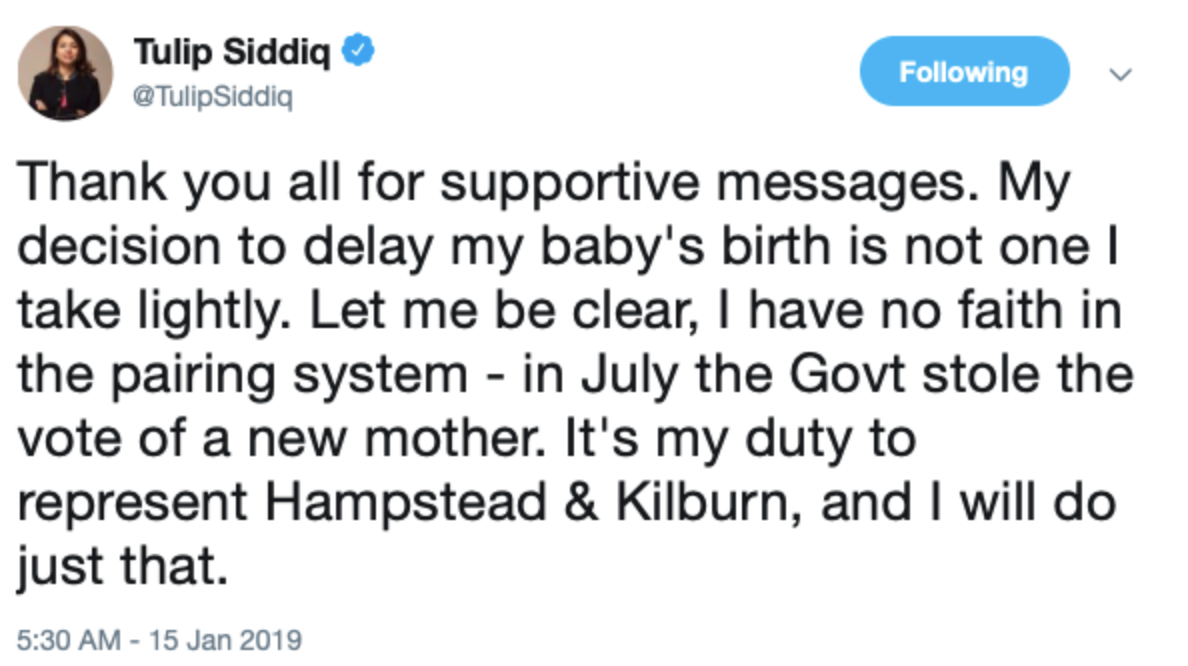
Labour MP Tulip Siddiq delayed her caesarian birth to take part in Tuesday’s vote on Theresa May’s Brexit deal.
More Brexit News
More than 170 business leaders join call for second Brexit referendum (Guardian)
More than 170 business leaders, including Terence Conran and Norman Foster, have thrown their weight behind the campaign for a second referendum on Brexit.
Macron says Brexit referendum was 'manipulated' (AFP)
French President Emmanuel Macron warns of the dangers of referendum votes, and says the Brexit campaign was 'manipulated from the exterior by a lot of what we call fake news'.
Don’t pivot to the Customs Union, Prime Minister – it could destroy the Conservative Party (Stewart Jackson MP, Conservative Home)
Conservative Associations are much less deferential, more activist, and frankly more Eurosceptic now. If May takes the path of least resistance by adopting the Customs Union post-Brexit to get any deal through the Commons, she risks not just a terrible party schism but electoral Armageddon.
William Hague says Brexit crisis could yet lead to an election (FT)
Former Conservative party leader William Hague tells City of London figures that the Brexit crisis may lead to a snap general election. Although Theresa May has insisted the next election will not take place until 2022, some cabinet ministers are discussing the idea of a new poll to break the deadlock at Westminster over Brexit.